

Custom Pools
Free Form Pools
Curved, naturalistic concrete pools that flow with your landscape instead of imposing on it.
What Is a Free Form Pool?
A pool shaped by your landscape, not a template.
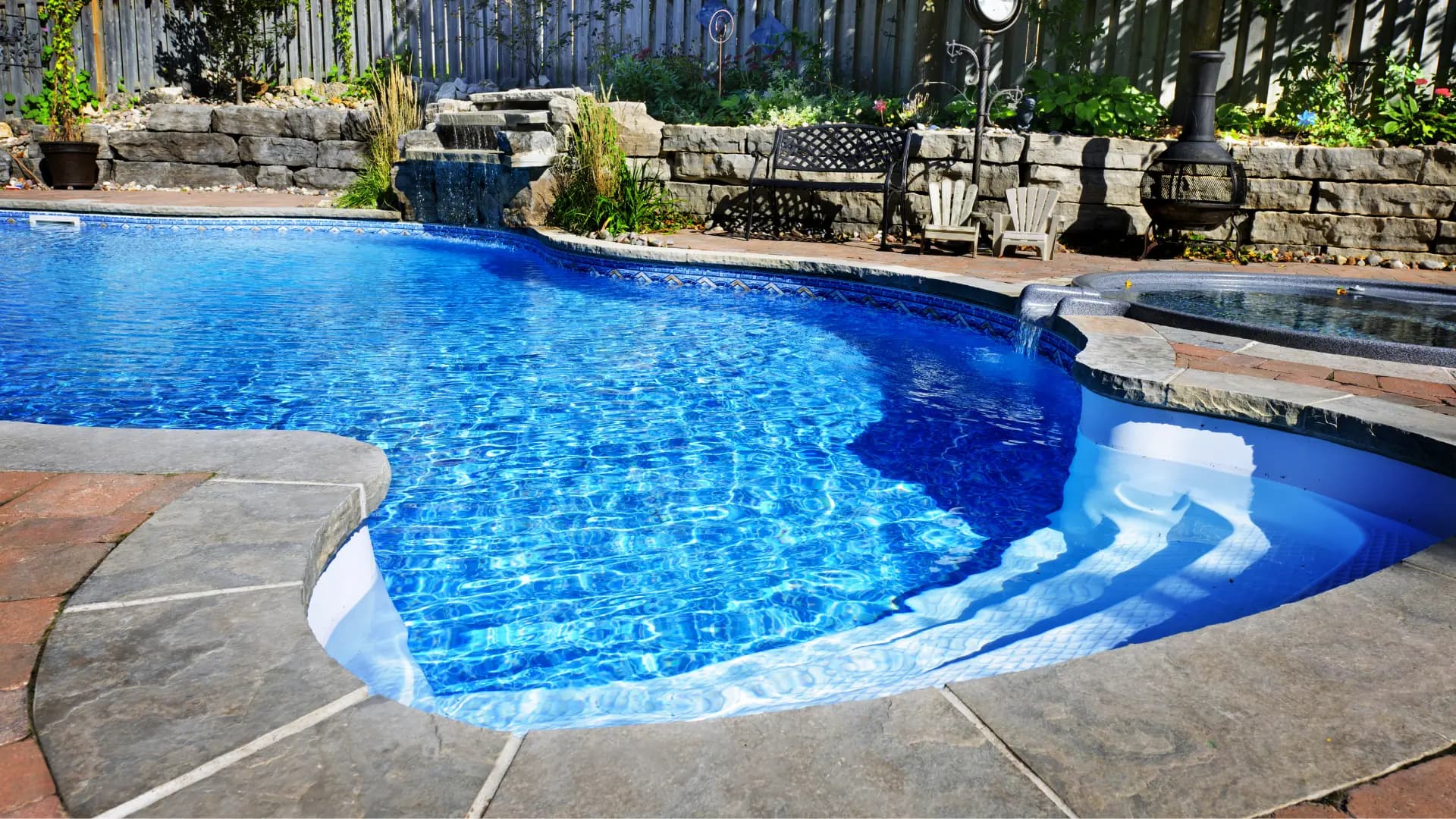
A free form pool breaks from conventional geometric design — its curves and contours follow the lines of a natural water body rather than a rectangle. The result reads less like an installation and more like a lagoon that was always part of the yard.
Because the footprint is adaptable, a free-form design can settle into landscapes that would fight a rigid shape. Solid Rock builds every one in concrete, collaborating with you on the design so the finished pool balances beauty, durability, and safety.
At a glance
- Curved, organic perimeter — no straight-line template
- Adaptable footprint that works around trees, slopes, and setbacks
- Concrete (gunite) construction — the shape is formed on site, not from a mold
- Pairs naturally with rockwork, waterfalls, and spillover spas
Design Considerations
What a curved shoreline changes about the design.
The shape is only the start — it shifts how the edge, the planting, and the features around it get designed.
Edges & Coping
A curved shoreline invites irregular stone and boulder coping instead of straight-cut pavers — the edge itself becomes part of the naturalistic effect.
Planting to the Waterline
Free-form edges leave pockets where beds can come right up to the water, softening the transition between pool and yard. Planting and hardscape are part of the same design conversation.
Features in the Curves
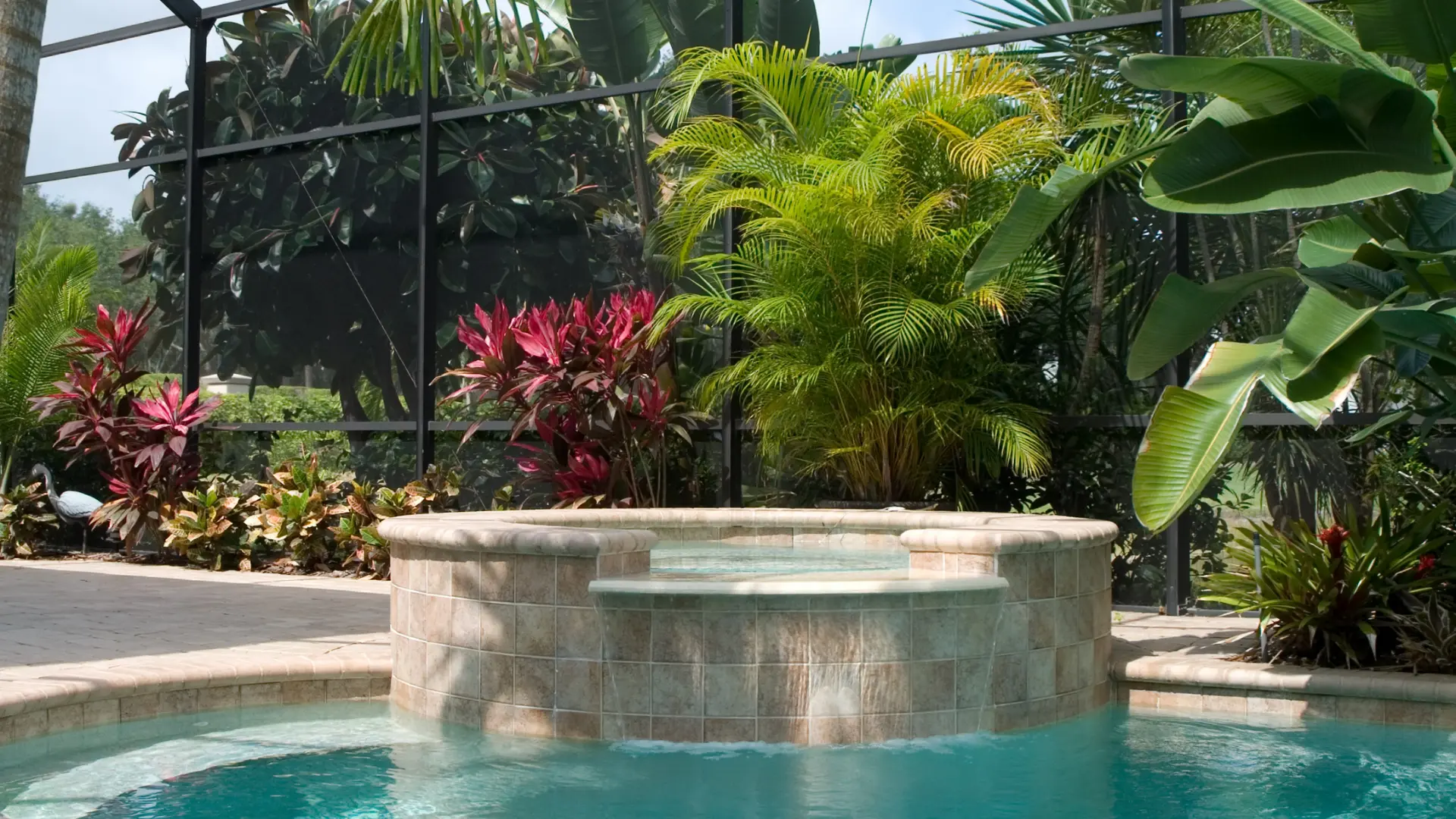
Rock waterfalls, grottos, and spillover spas sit naturally inside a curve — the shape gives features a home instead of bolting them onto a rectangle.
Deck Flow & Alcoves
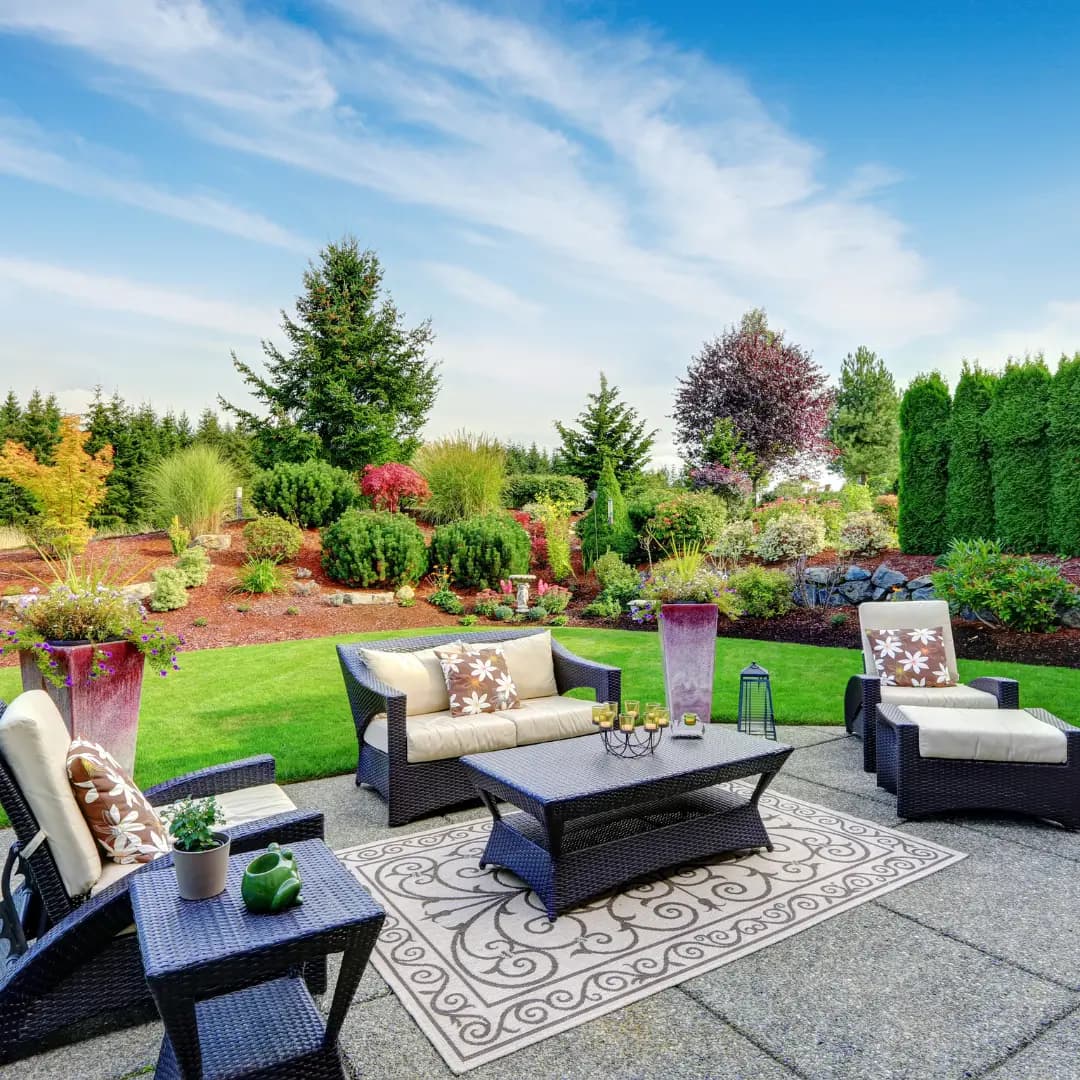
Curves create natural alcoves for seating, sun shelves, and shade — the deck wraps the water in varied depths rather than one uniform apron.
Planting, patios, and retaining walls are part of the same project here — explore our landscaping work.
Is It Right for Your Yard?
Four questions that shape a free-form design.
You don't need answers before you call — but walking the yard with these in mind tells you whether a free-form shape is the right instinct.
How does your yard slope?
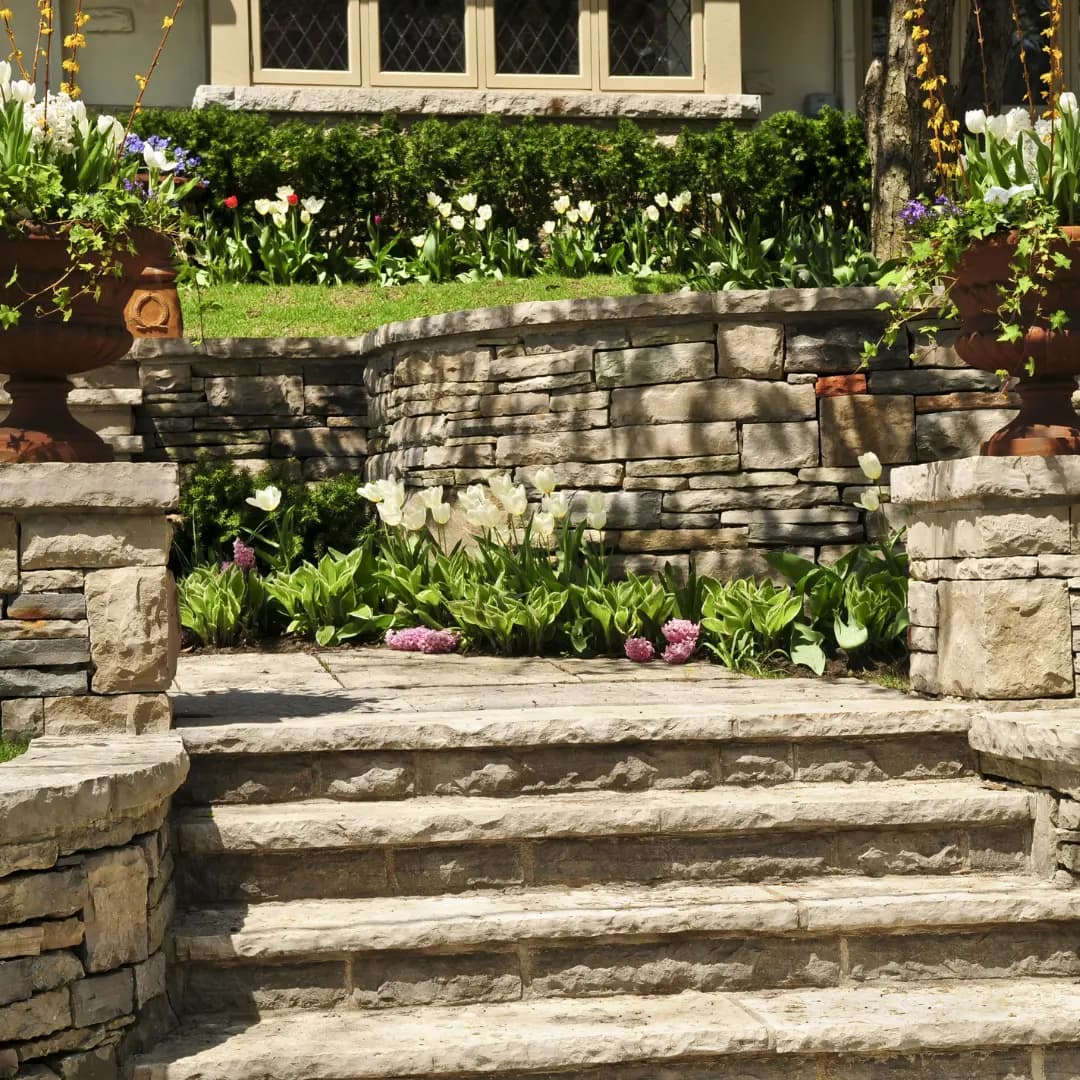
A flat pad accepts any shape. A grade change is where free-form design earns its keep — the shoreline can step with terraces, boulder walls, and planted slopes instead of fighting the grade with one long retaining wall.
Where are the tree lines?
Mature trees decide sun, shade, and leaf drop — and their root zones deserve respect. A curved footprint can bend around the trees you want to keep rather than forcing their removal.
What do you see from the house?
From a kitchen window or a covered porch, a free-form silhouette reads like a pond settled into the land. If you want the water to feel like it was always there, the view from inside matters as much as the view from the deck.
Natural or architectural planting?
Loose, layered planting flatters a curved shoreline. If your taste runs to clipped hedges, symmetry, and crisp lines, a geometric pool may suit the yard better — the honest answer is sometimes a different shape.
The Naturalistic Details
The elements that make a free-form pool feel inevitable.
FAQ
Free-Form Questions, Answered
Shape alone isn't the cost driver. Size, depth, site access, rockwork, and the features you build into the shell matter far more than whether the perimeter curves. A free design consultation and site walk is how you get a real range for your yard.
Often, yes — the shape's whole advantage is that it flexes around setbacks, trees, and slopes instead of demanding one big rectangle of clear space. For very tight yards, a compact free-form design or a plunge pool are both worth comparing.
Yes. Because the pool is concrete, spas, sun shelves, and water features are formed into the shell as part of the design rather than added on afterward — and they tend to sit most naturally inside a curved shape.
Day-to-day water care is the same as any concrete pool. Curves can create pockets that circulation needs to reach, which is a plumbing and return-placement question settled at design time — not something you manage afterward.
See What a Free-Form Design Could Do With Your Yard
Every project starts with a free on-site consultation — we walk the yard with you before anything is drawn.
Comparing shapes? See all five pool types